A Customer Record Built Around Products, Not Deals
Leads, customers, opportunities, cases, quotations, and orders, with Cases holding the product portfolio that outlives every individual deal.
The Record
What a Packaging Deal Is Made Of
The objects your team works in every day, plus the one generic CRMs are missing, which is the case that holds a customer's products for years.
The Pipeline
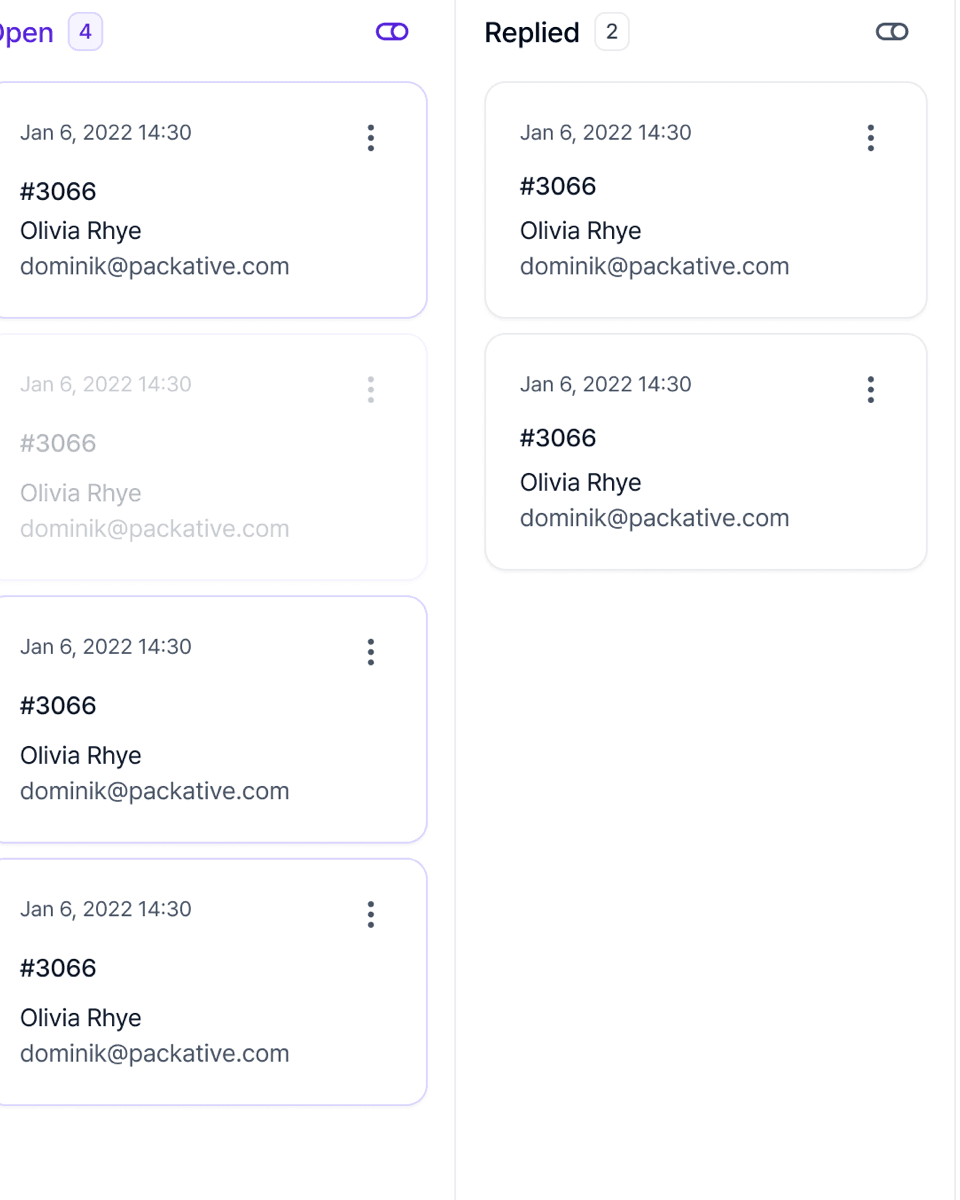
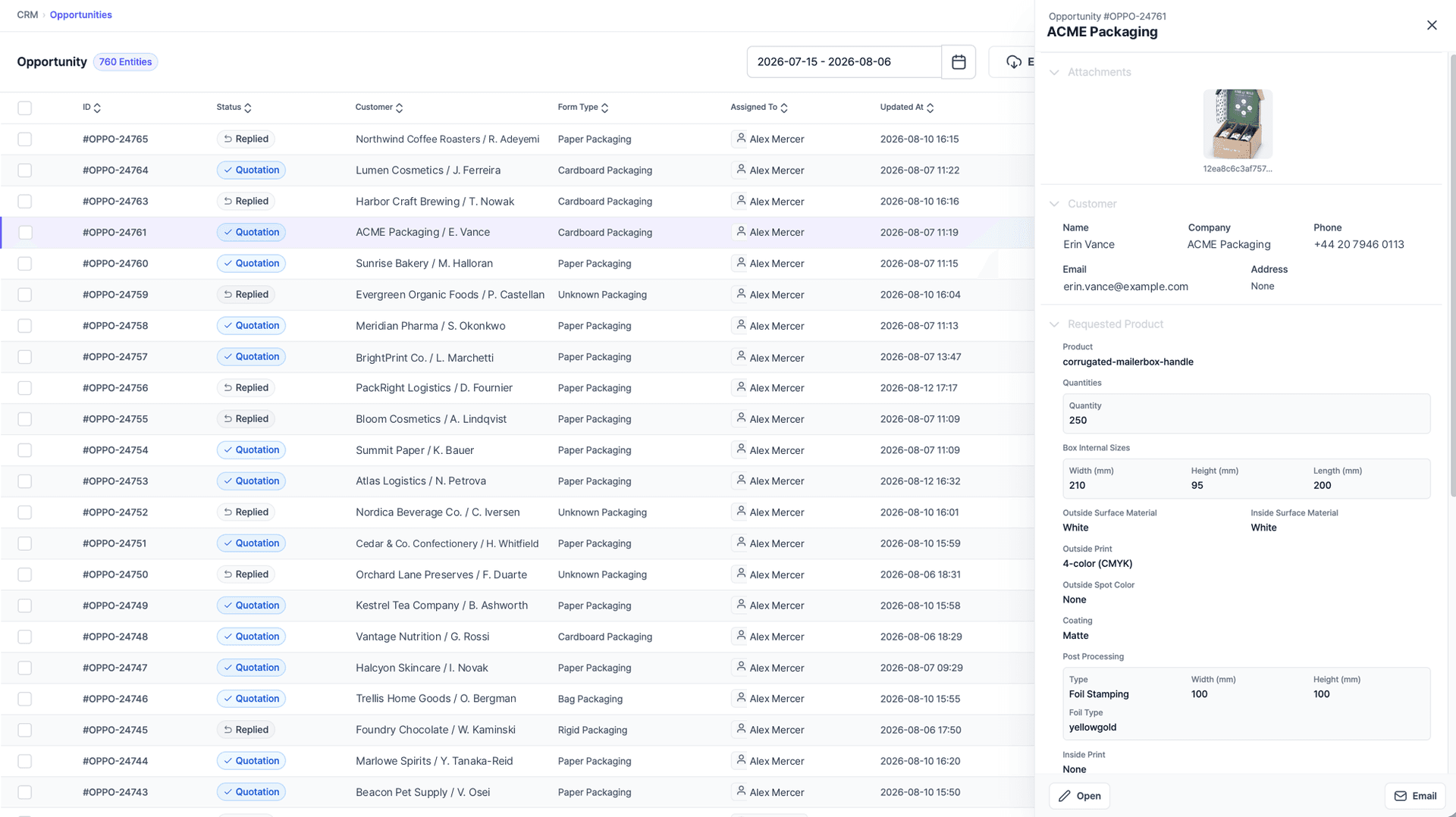
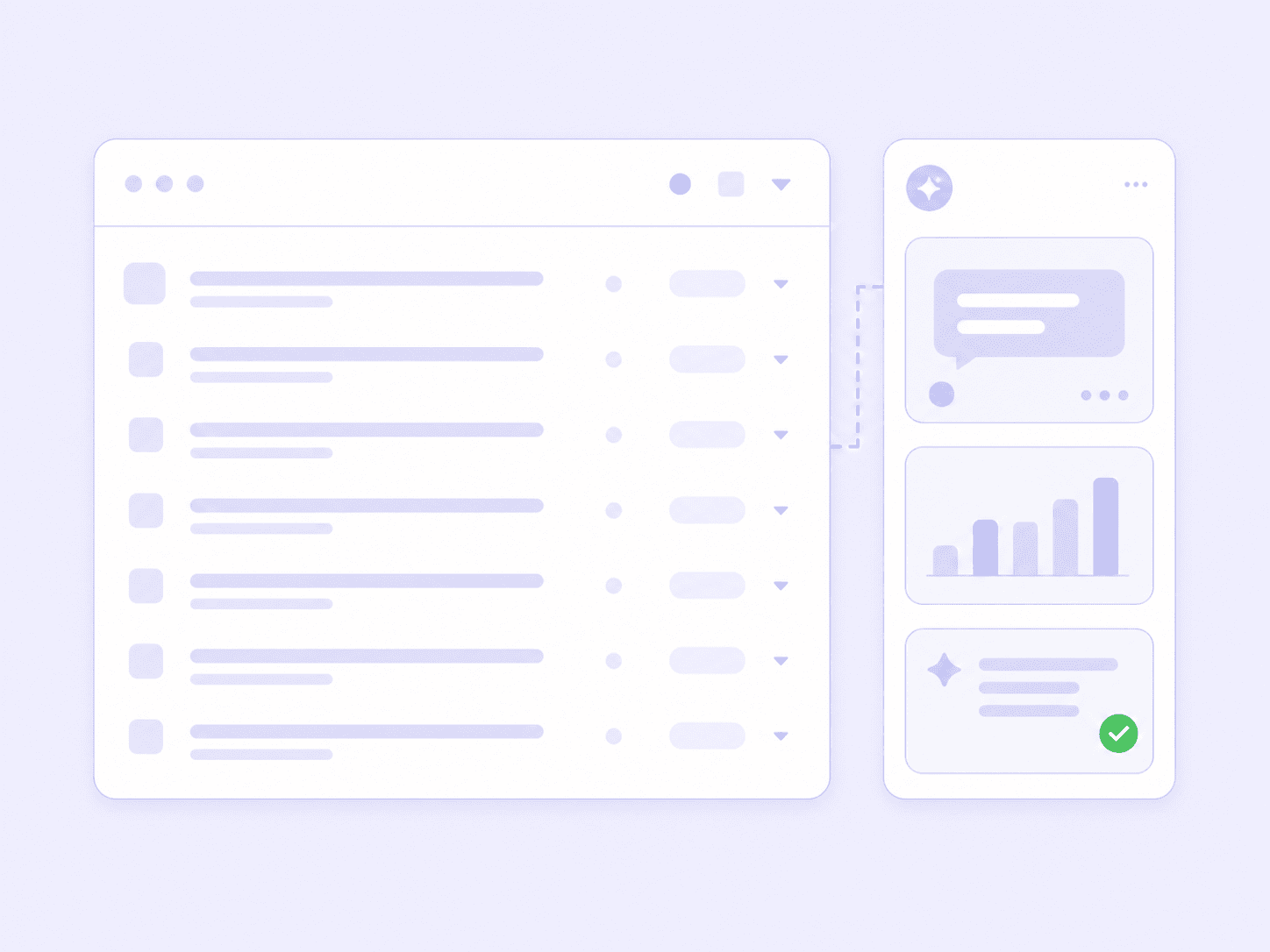
Leads, customers, opportunities, cases, quotations, and orders. Each moves through clear stages with a full history. Everything lives on one customer record, so there is no separate leads list to reconcile.
Opportunities Keep Their Own Paperwork
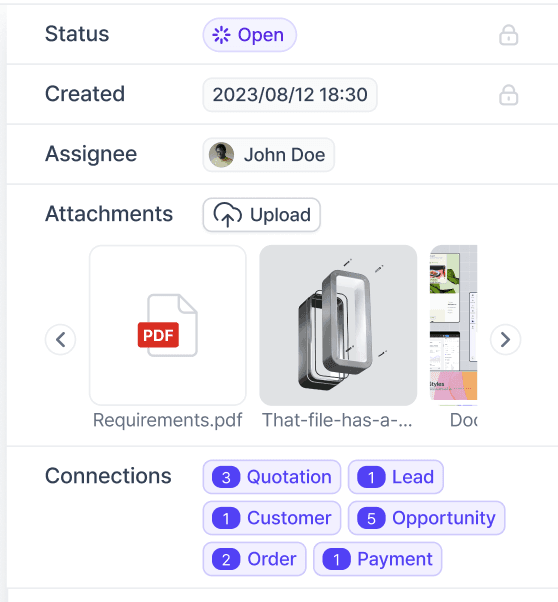
An opportunity is not just a stage and a number. Files sit on the record, whether artwork, specs, or the customer's own drawing, and every related lead, customer, quotation, order, and payment is one click away, so nobody hunts through an inbox to reconstruct a deal.
- Attachments on the record, not in an email thread
- Linked leads, quotations, orders, and payments, counted
- Assignee and status visible without opening anything
Cases
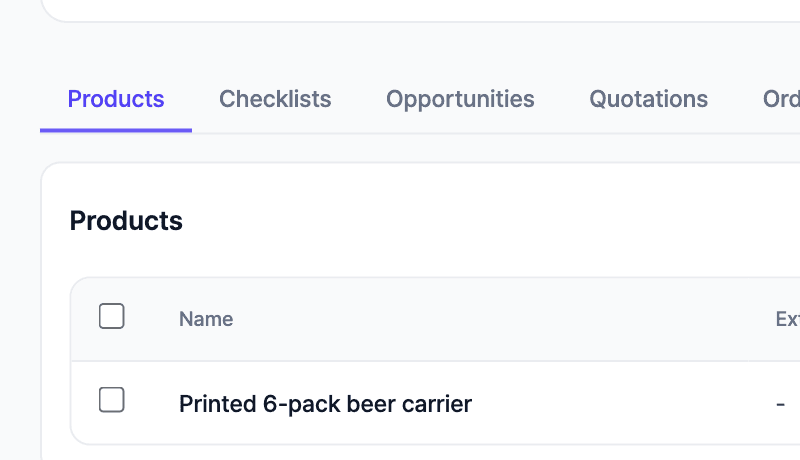
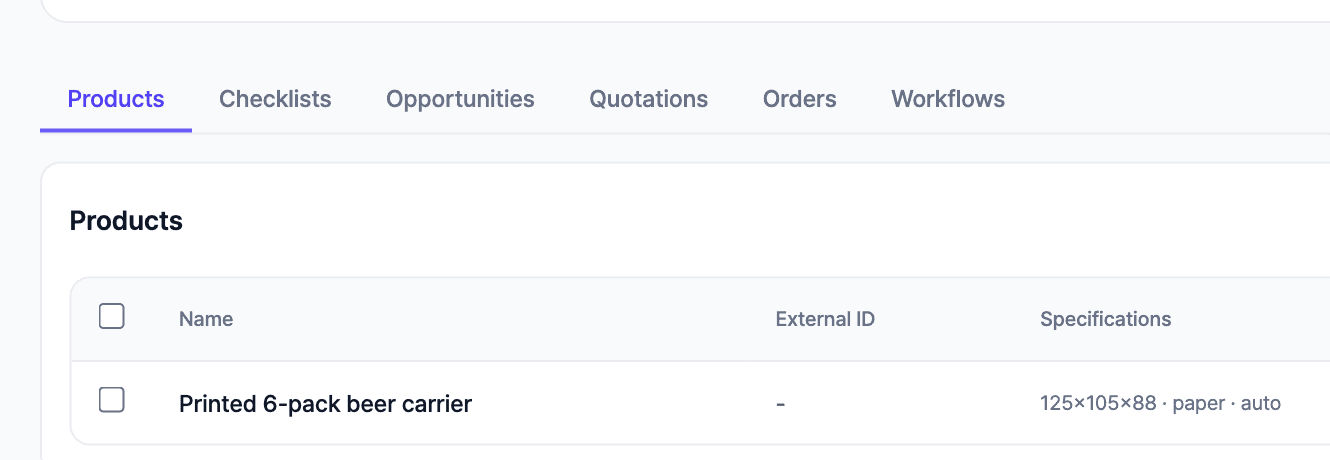
Cases are the piece generic CRMs do not have: a permanent container for one customer's product portfolio that never closes. Multiple opportunities can sit inside a case, and each product in it carries its own design versions, files, configurable checklist, and spec form. Packaging customers reorder the same items for years, and a Case is the record that survives every deal.
- Permanent, never-closing product-portfolio container
- Design versions, files, and a checklist per case product
- A spec form for every product you make for a customer
Quotations
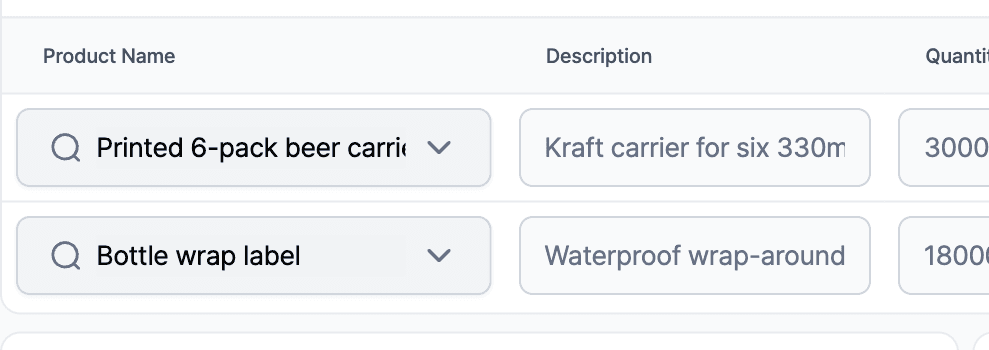
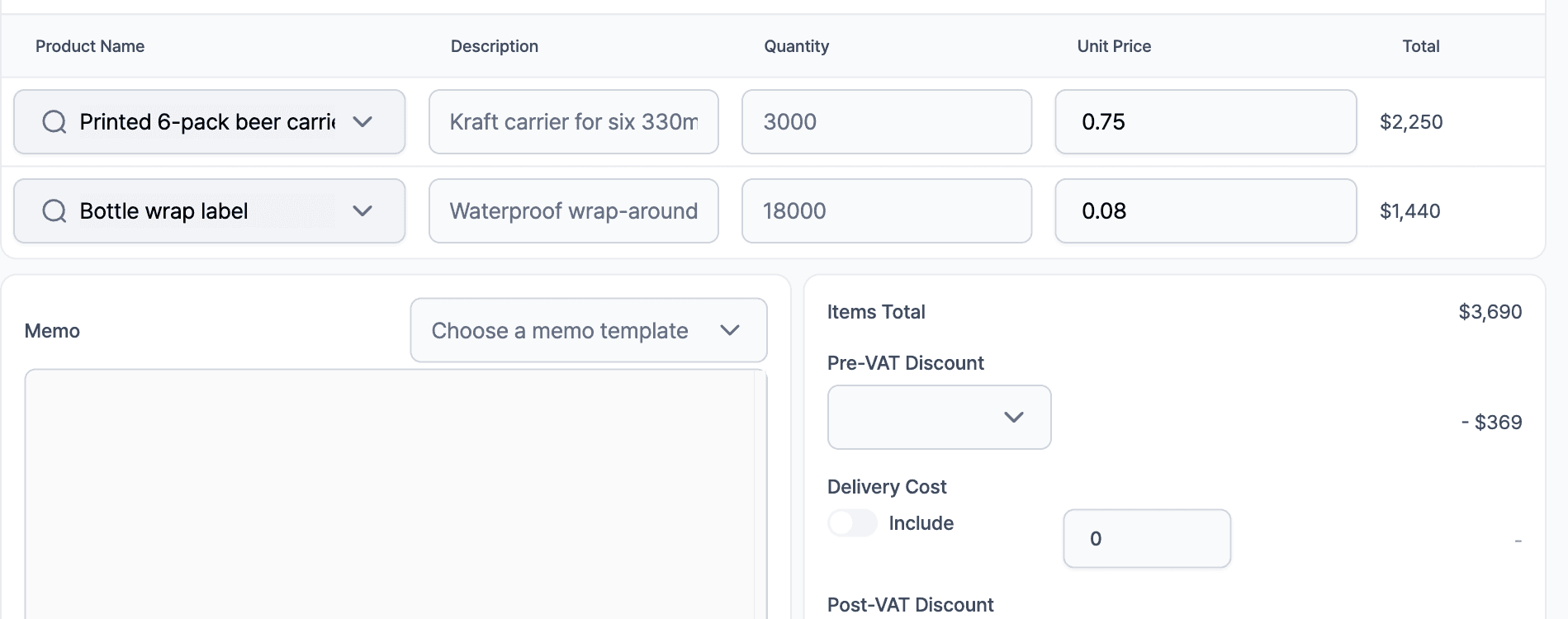
Quotations are built straight from the case products a customer already buys, so a reorder is never retyped.
- PDF generation with direct email and SMS send
- Follow-up status, expiry automation, and payment links
- Excel and CSV export that handles large volumes
Orders
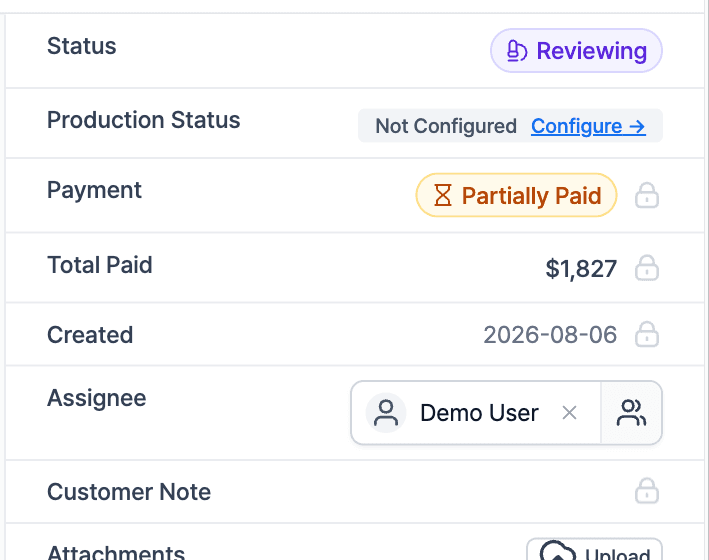
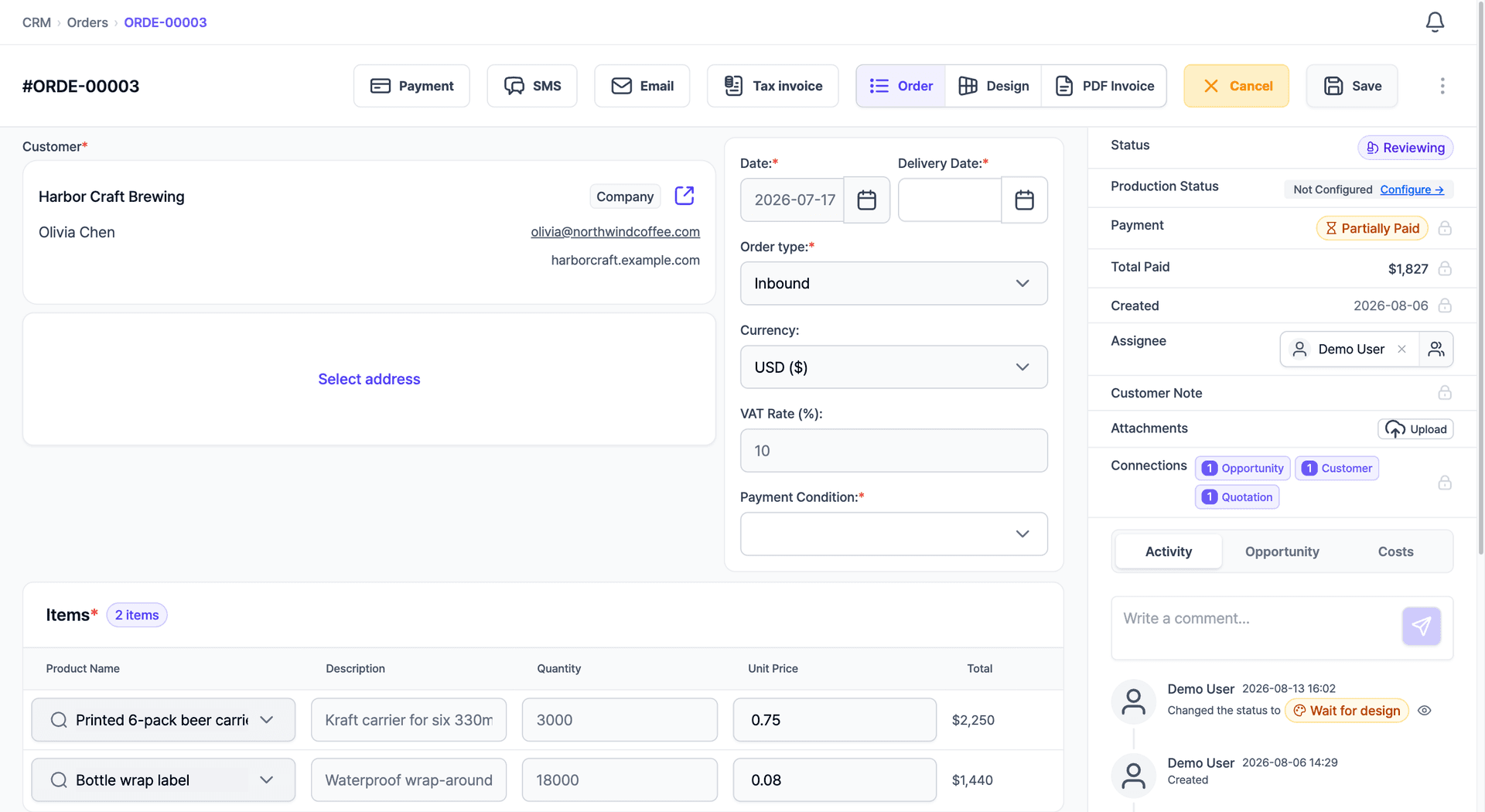
The order is where the deal becomes a job. Items and prices, payment status, production status, the design decision, and the connections back to the opportunity and quotation sit on one record, with the activity trail beside them, so the history is readable months later.
- Payment and production status on the record itself
- Design requests and approvals, with shareable customer links
- Linked opportunity, customer, and quotation, one click away
On the Record
What Sits on Top of the Deal
Design review, history, online ordering and your own spec forms live on the same record, not in an inbox, a chat app, or a second system.
Design Confirmation on the Order
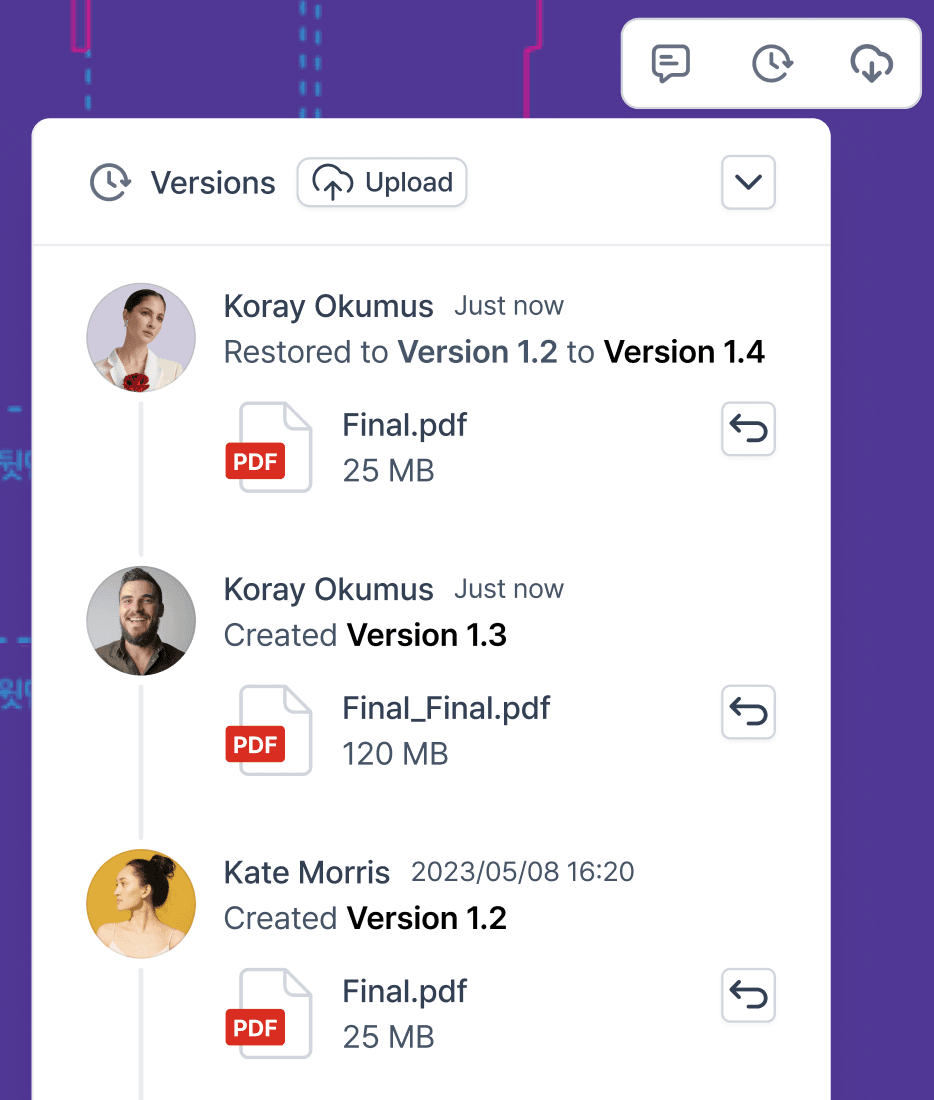
A wrong design that ships is the most expensive mistake in packaging, so the confirmation sits on the order itself. Every design carries its version history, so Final.pdf and Final_Final.pdf become a list with an owner and a timestamp, and the file that was approved is provably the file that ships.
Comments and Approval, From a Link
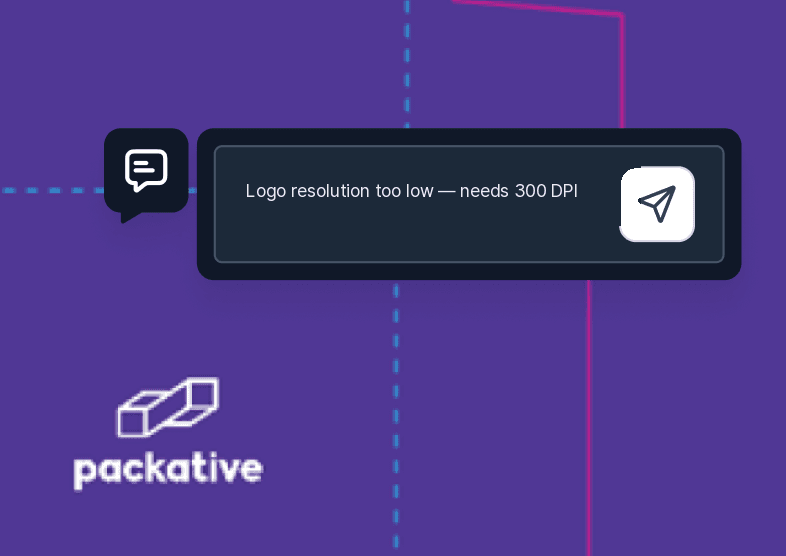
Your team and the customer comment on the drawing itself, in threads, so the remark about the back panel sits on the back panel. The customer approves or requests changes from a shareable link with no account and no login, and the decision lands on the order: which version, who approved it, and when.
- Versioned files with history and rollback
- Threaded comments on the design, both directions
- Approval recorded on the order, reconstructable months later
Activity on Every Record
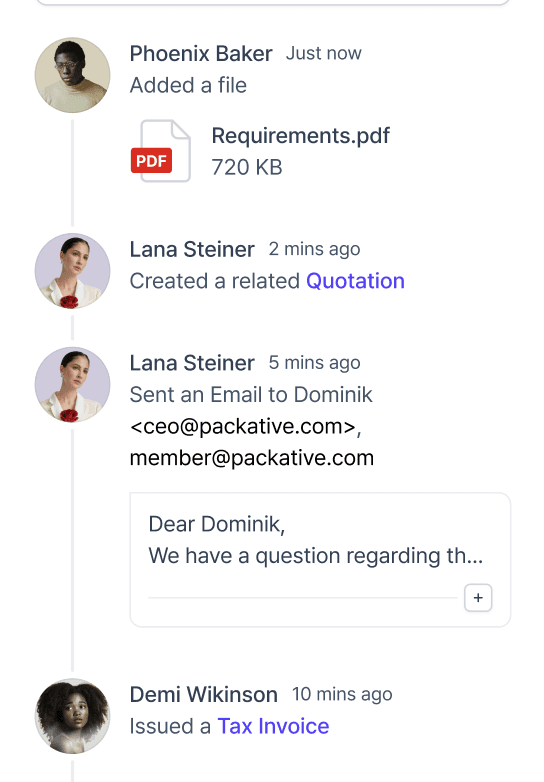
Every record carries its timeline: who added the file, who created the related quotation, who sent the email, who issued the tax invoice, and when. History is not a separate module; it sits on the record where the work happened.
Let Customers Order Online
Not every order needs a phone call. Your product pages can take the order and the payment through hosted checkout, the way our own packaging shop runs on Packative One. Online orders land in the same pipeline as everything else, so your team keeps the deals worth their attention.
- Hosted checkout pages, with no customer account to manage
- Payment links you can attach to any quotation
- Online orders on the same pipeline as inbound and outbound
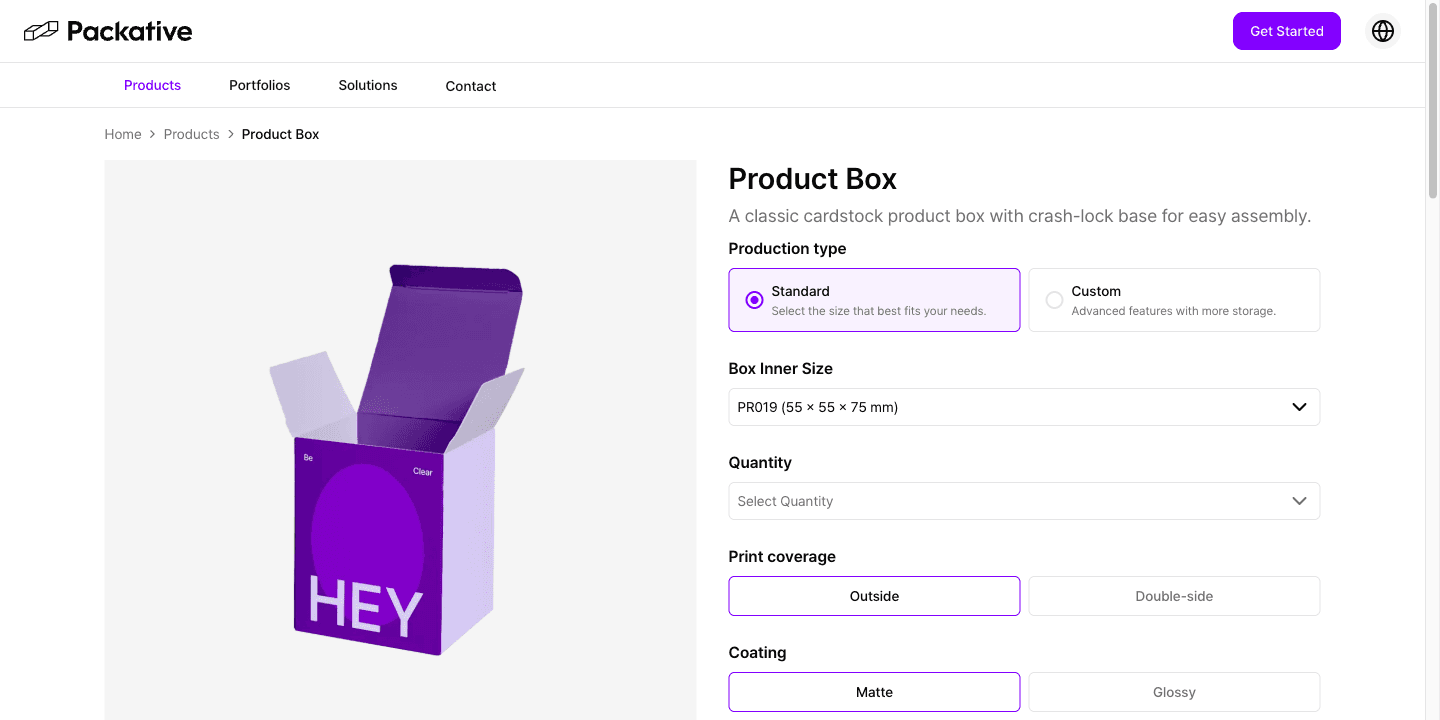
Form Studio
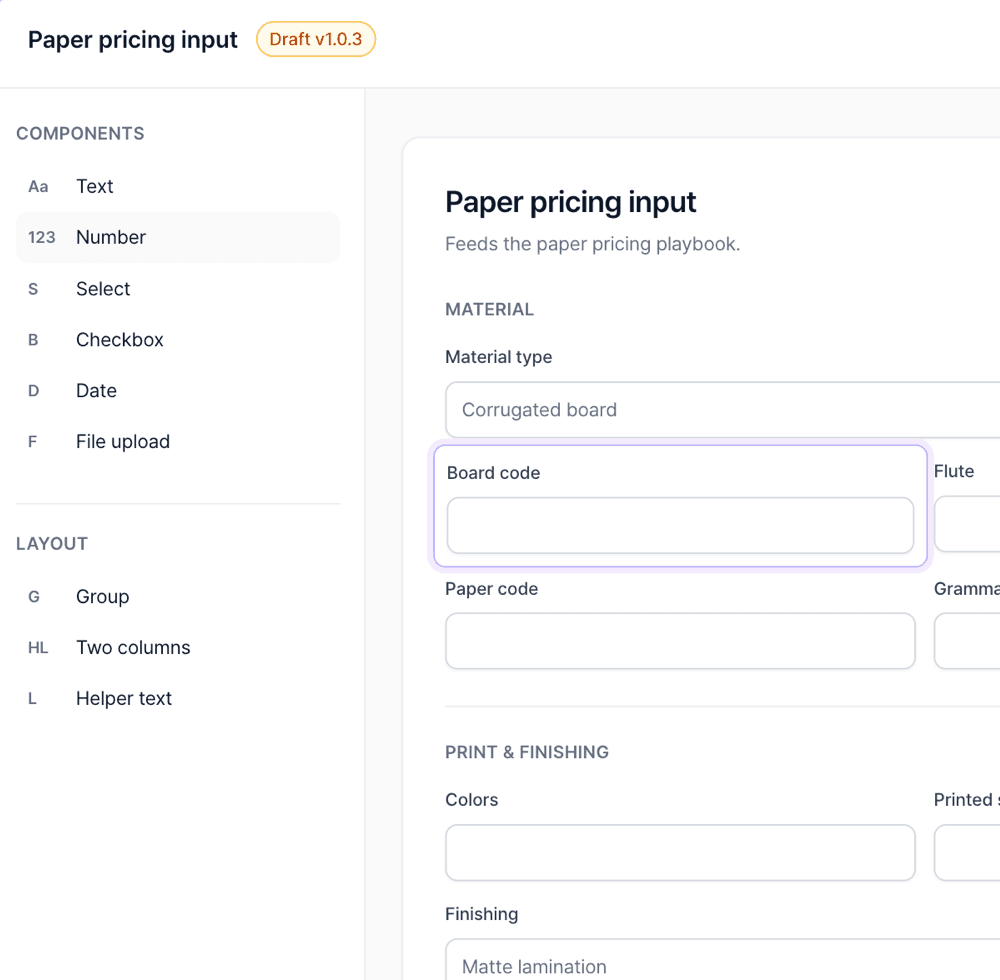
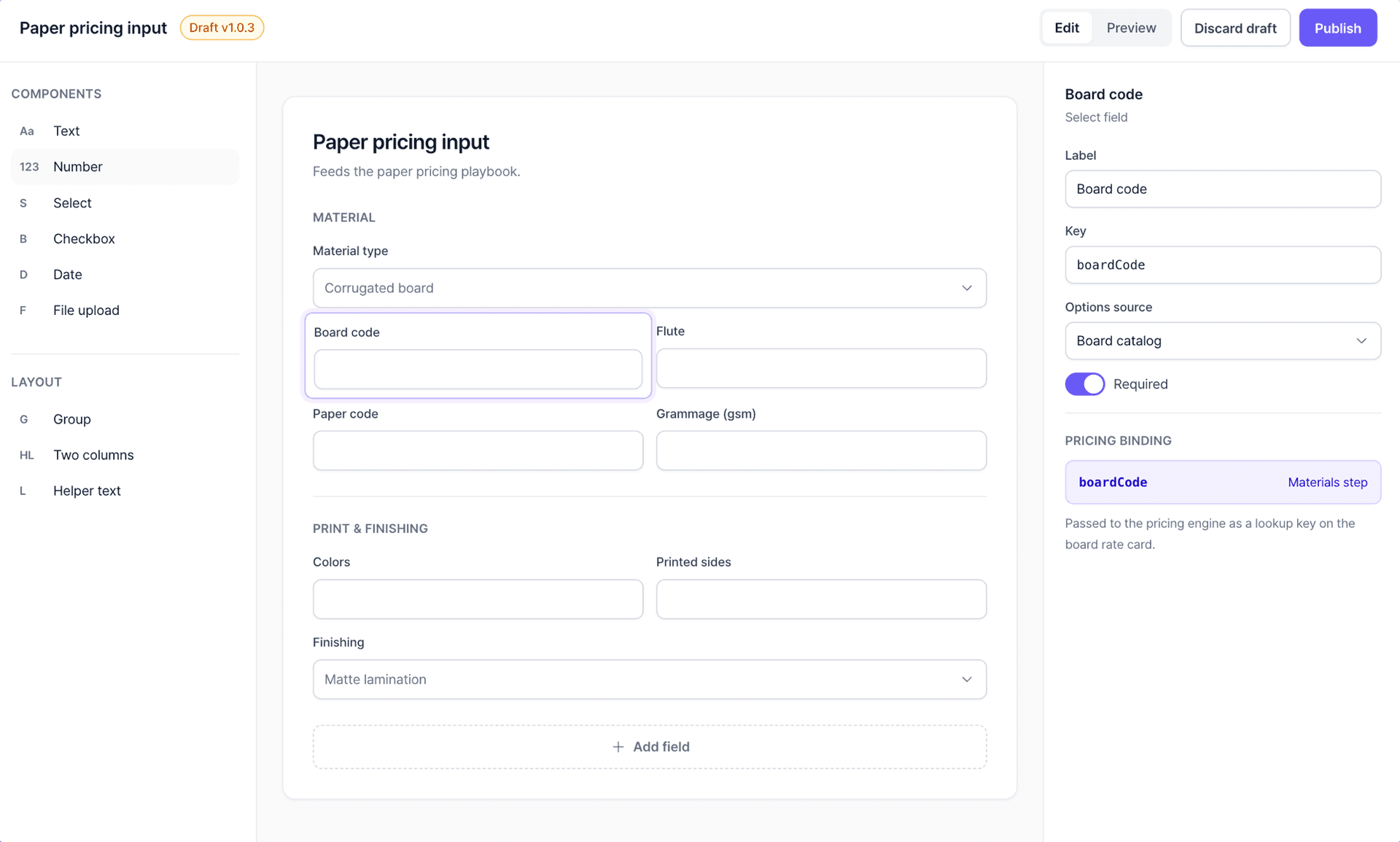
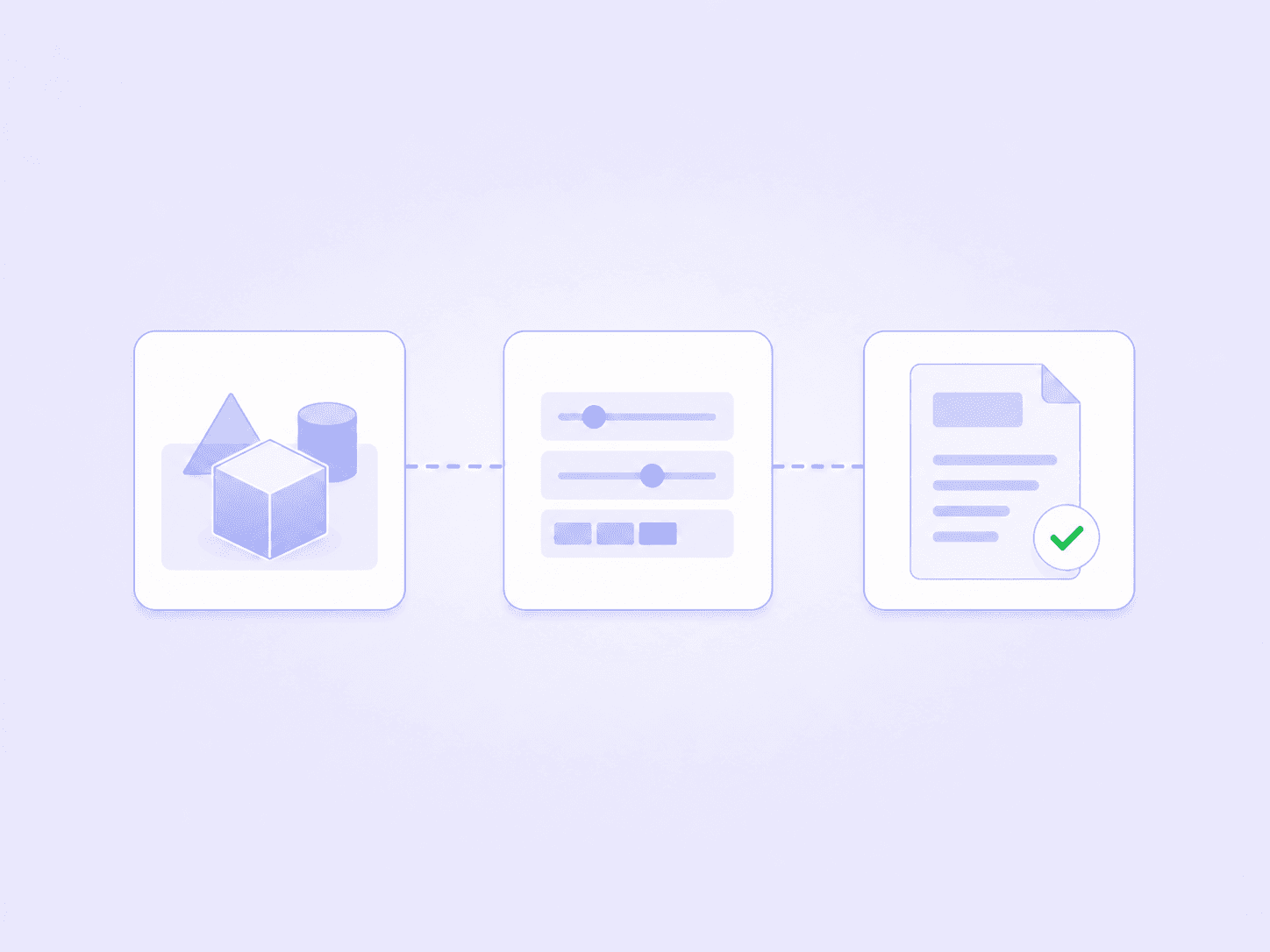
Capture your own specs without engineering, using a drag-and-drop form builder, so each business records packaging specs its own way.
- Fields that calculate themselves from formulas and cost tables
- Multi-language labels and versioned form definitions
- Tables, file uploads, and external data lookups
Common Questions
Questions You Are Probably Asking
A Case is a permanent container for one customer's product portfolio. It never closes. Multiple opportunities can sit inside it, and each product in the case carries its own design versions, files, checklist, and spec form. Packaging customers reorder the same items for years; a Case is the record that survives every individual deal.
Did Not Find Your Answer?
Ask us directly. Bring the question to a call and we will answer it against your own quoting process.
Keep Exploring
The Rest of the Platform
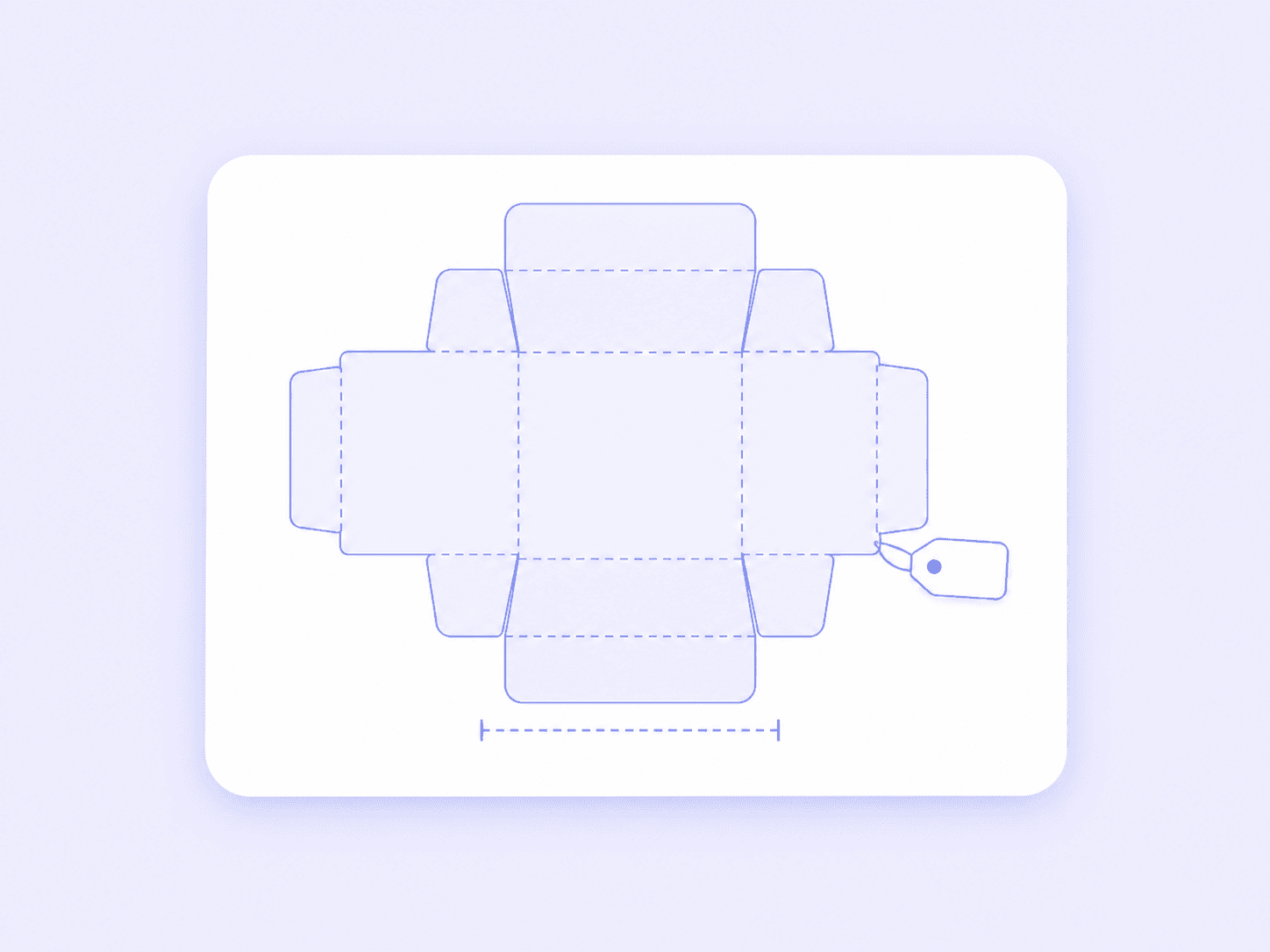
See It Priced on Your Own Box
Bring a dieline and a quantity from last week, and we will walk through how Packative One would quote it.