
How It Started
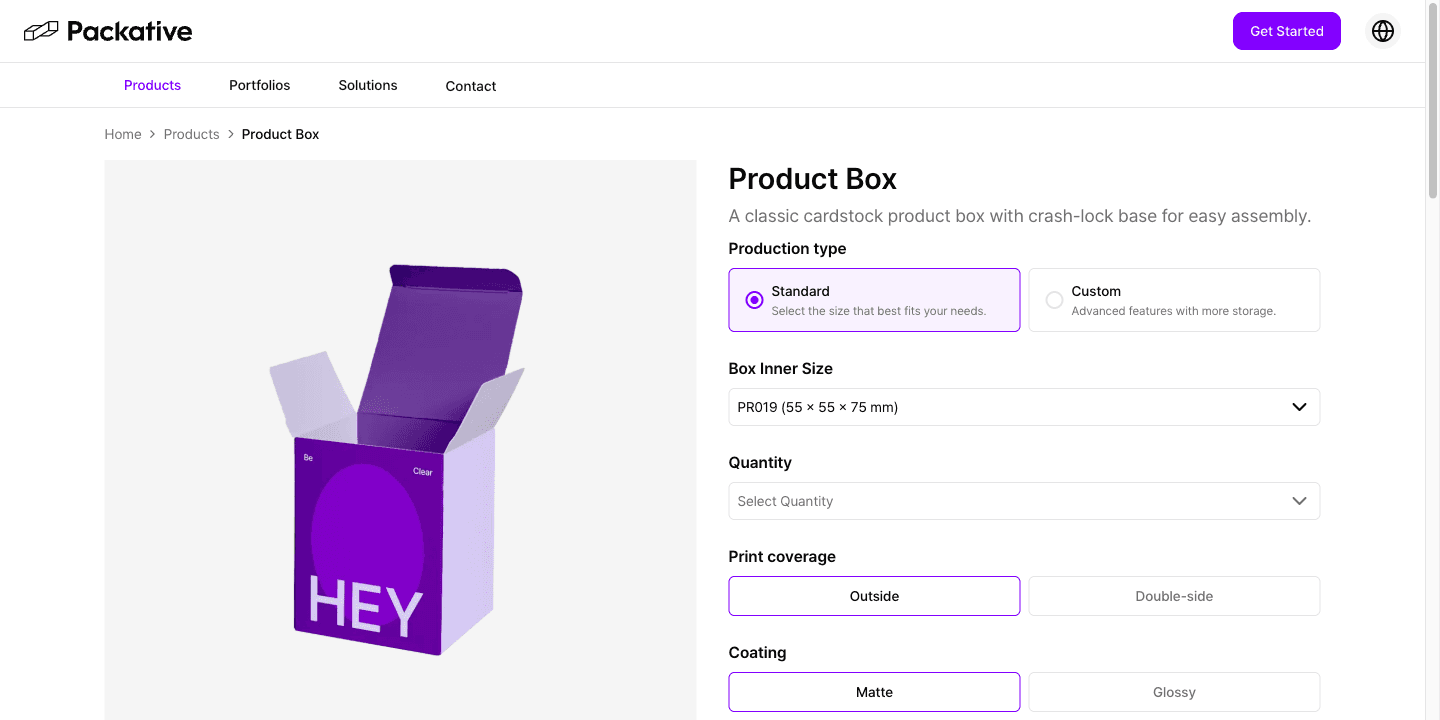
The problem found us in 2018, sourcing food and beverage for twelve country houses at the Olympic Games in PyeongChang: nobody could price a specification quickly, quotes took days, and suppliers were reachable only by phone and attachment. Work on it started in 2020 and Packative was founded in Seoul in 2021 as a tech packaging company. The first focus was the supplier side, solving the problems manufacturers face turning inquiries into produced work. That widened into serving both sides of the trade: the brands ordering packaging and the suppliers producing it. We shipped real work for food, cosmetics, and fashion brands: folding cartons, rigid boxes, corrugated shippers, shopping bags. The storefront is still live at packative.com, still taking orders, still our proving ground.
That matters for one reason: the domain assumptions in Packative One are not guesses. They exist because someone on our own team needed them on a Tuesday.
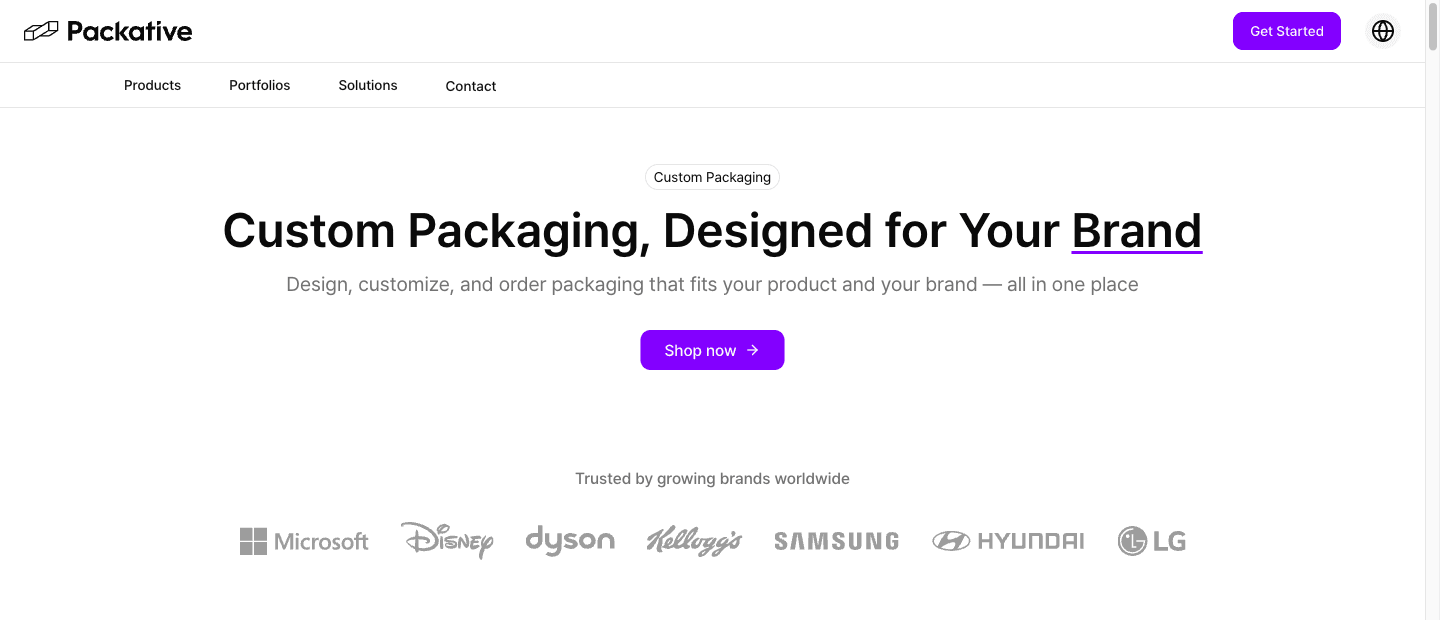
“We didn't set out to build software. We set out to stop losing margin to our own spreadsheets.”Packative
The Volume Arrived Before the System Did
Customers and leads arrived faster than the tooling could keep up. The tooling was spreadsheets, chat threads on messenger apps, and willpower. A quote request would land in a chat at 9 p.m.; someone would copy last quarter's file, change the dimensions, and hope the waste allowance still held. Nobody could answer “why is this number this number” a month later. The same customer's third reorder was priced by a different person, differently. Supplier quotes arrived as PDFs and got retyped. Payments were reconciled by hand against a bank statement.
None of this was unusual. It is how most packaging businesses run today. The difference is that we happened to be able to write software about it.
Growth Shape · 2021–2026
23,591
RFQs processed since 2021
“We tried the quoting tools on the market. None of them could price a box the way packaging actually gets made.”Packative
The Decision
We did not start by building. We started by configuring: Odoo first, then ERPNext, customised toward how a packaging business actually quotes. We ran the company on that for a few months, and what became clear was not that the software was bad. It was that every hour went into forcing a system built for general trade to understand flute grades, sheet yield and waste, and none of those hours made the business better at packaging.
The rest was arithmetic. We had spent fifteen years implementing CRM, ERP and document systems for other companies, so we knew what maintaining that customisation would cost us in year three. Generic CPQ tools have no concept of packaging. Print ERPs are built for factory operations rather than for a trading business sourcing from many manufacturers. So we stopped configuring somebody else's model and wrote the pricing logic ourselves, shaped by what the work actually required: sheet catalogs, cut factors, loss cascades, dielines.
“We are our own biggest user. When quoting breaks, it breaks our orders before it breaks anyone else's.”Packative
What Got Built, in the Order the Pain Demanded It
Pricing first: the pricing rules, cost tables, sheet catalogs, the loss cascade. Then nesting, because the estimate is wrong if the imposition is wrong. Then CRM and quotations, because the pricing was useless without the customer context. Then Cases, because packaging customers do not buy once; they buy the same four SKUs forever. Then finance, because tax invoicing and bank matching consumed a person. Then AI, because by 2026 the gain was obvious, and the guardrail, approve-before-write, was equally obvious.
The First Answer Usually Wins
Packaging buyers send the same RFQ to several suppliers at once, and we learned early that the deal tilts toward whoever answers first with a usable number. Not the politest reply, not the prettiest PDF. The first real quote frames the negotiation, and everyone after it is quoting against that frame.
So first response time is the number we watch hardest in our own operation. When quoting takes days of spreadsheet work, being first is luck. When the calculation runs in minutes, being first is the default, and the same-day quote became our habit rather than our exception.
Packative Studio: The Design Bottleneck, Removed
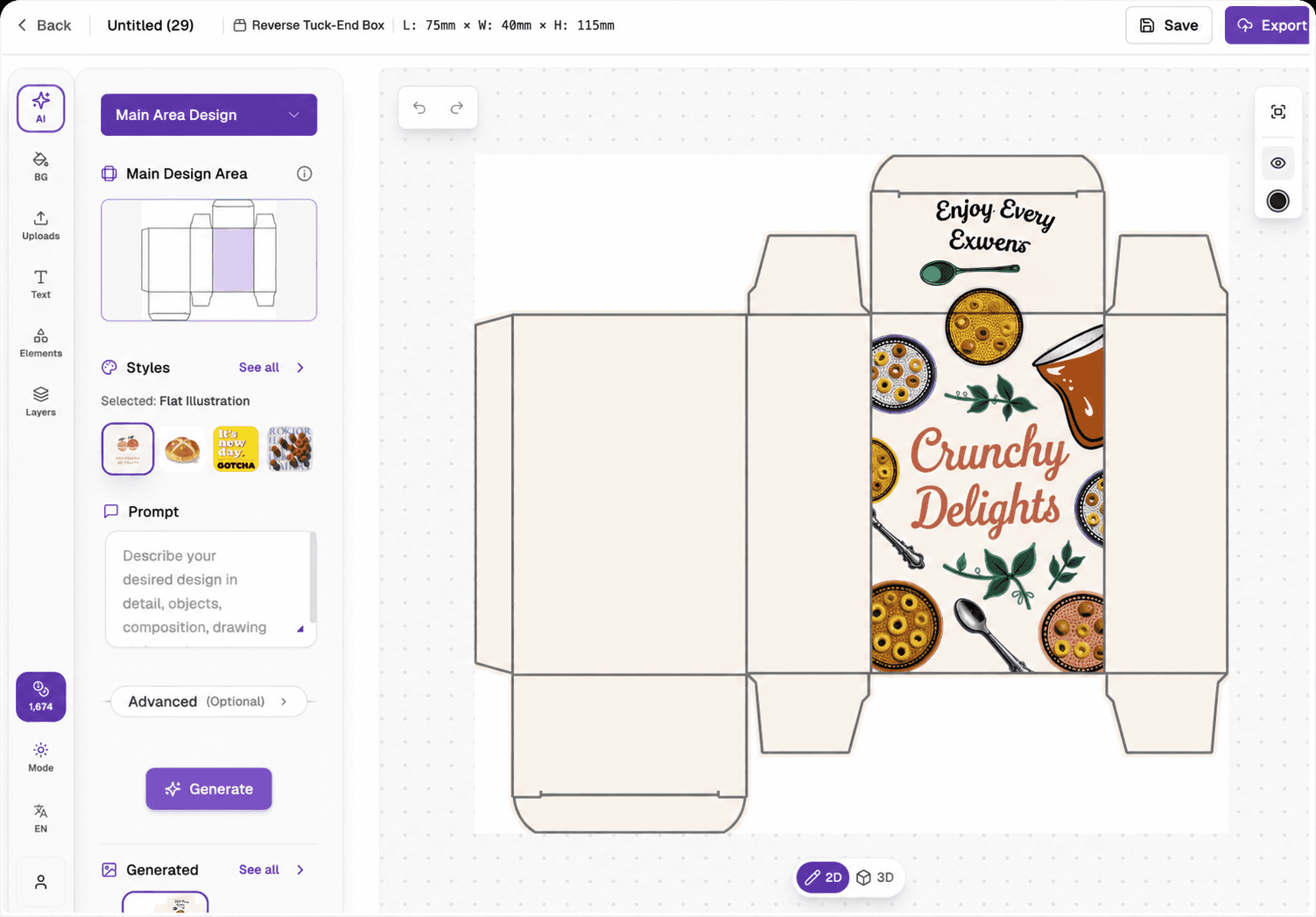
Quoting was not the only place customers stalled. Artwork was the other. Most brands ordering packaging do not have a designer on staff, and a box that cannot be designed does not get ordered. So we built Packative Studio into the storefront: pick a box format, and AI generates the artwork directly on the real dieline, panel by panel, with the folds and bleeds already correct. Preview it in 2D and 3D, refine it, export print-ready files.
It runs on the same structural truth as everything else we build: the dieline the customer designs on is the dieline that gets produced. Studio is live today at packative.com/en/studio.
Every Product Page Is an RFQ Intake
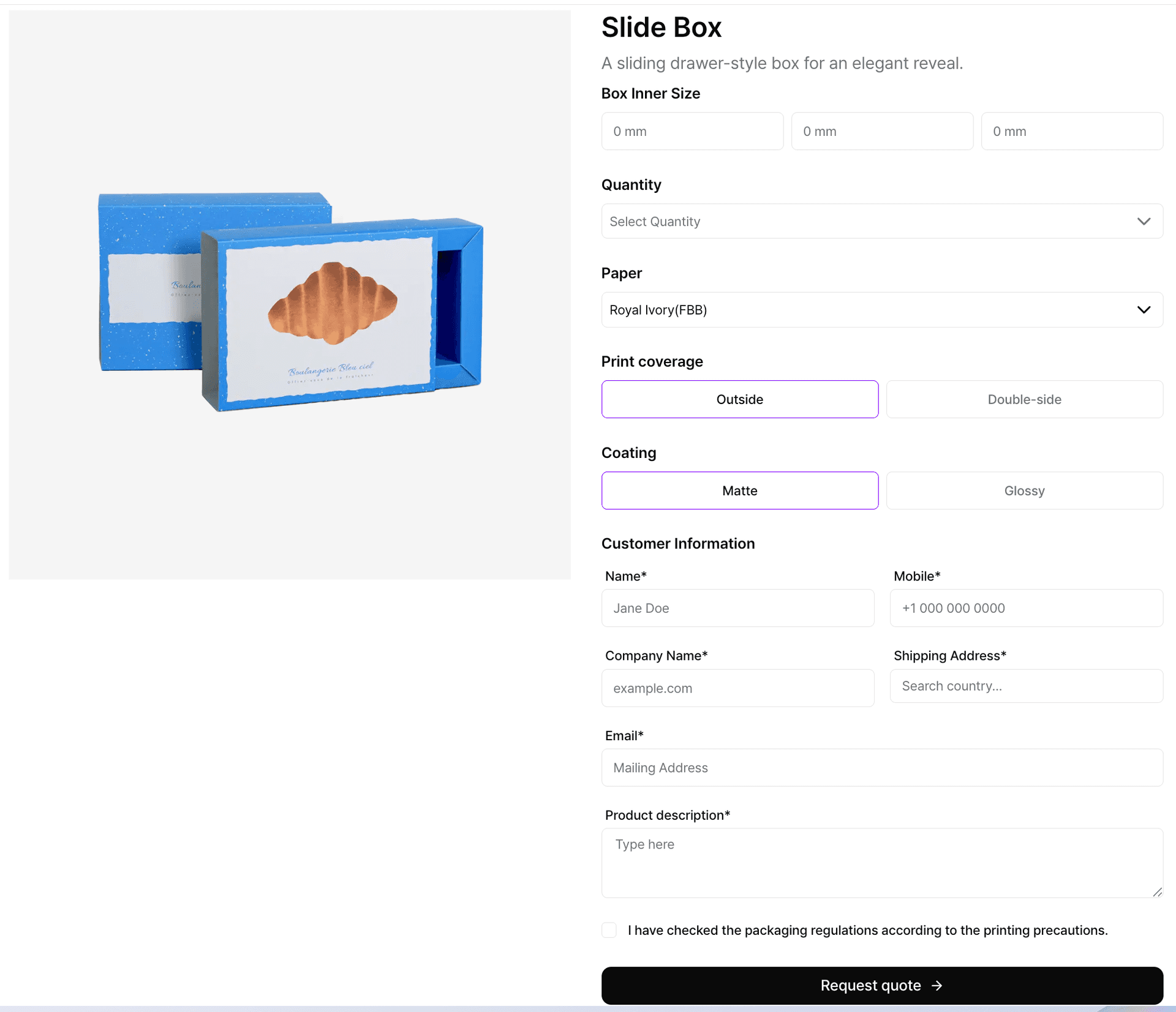
The storefront and the platform are not two systems with an export between them. Every product page on packative.com is fully integrated with Packative One. A customer configures a slide box, choosing inner size, quantity, paper, print coverage and coating, and the moment they press Request Quote, that configuration lands in our pipeline as a structured RFQ: spec captured, customer identified, nothing retyped.
Dozens of product pages, one intake. It is the same integration we now offer print businesses and webshops: your pages sell, and the RFQs arrive as data.
Why We Are Our Own Hardest Customer
Packative's packaging operation runs on Packative One every day. Two consequences are worth stating plainly: a broken quoting flow costs us orders before it costs anyone else theirs, and no feature ships because it demos well.
What This Means for You
The sheet catalogs, the flute grades, the loss cascade, the reorder patterns: those are in the product because we needed them first. That is the whole argument: the assumptions are right because we ran the business that needed them.