Salesforce became the operating system for B2B sales. Shopify did it for direct-to-consumer commerce. Faire did it for wholesale. Each one turned a messy, relationship-driven business into software, and each became worth billions doing it.
Packaging never got that treatment.
$1.2 trillion
Produced in packaging goods every year, by tens of thousands of converters, on a fragmented patchwork of legacy MIS and ERP tools, stitched together with email, PDF attachments, and one estimator's spreadsheet.
That is the gap. It is the largest B2B category still missing its category-defining platform, and it is the reason Packative One exists.
What an Operating System for an Industry Means
An operating system for an industry is the single layer where the core transaction of that industry happens end to end. For sales, that transaction is the deal. For retail, the order. For packaging, it is the path from a brand's first inquiry to the finished box on the dock.
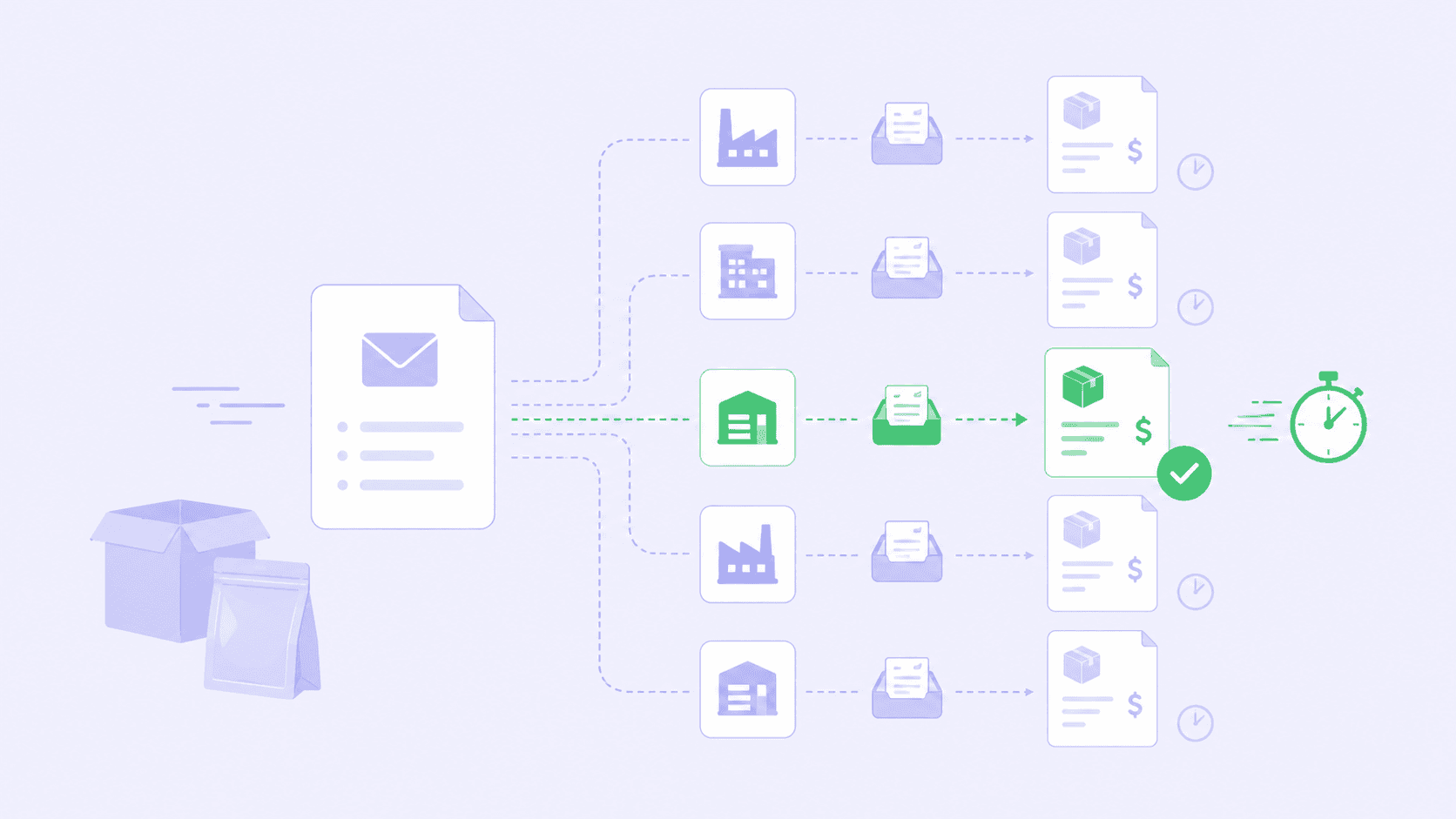
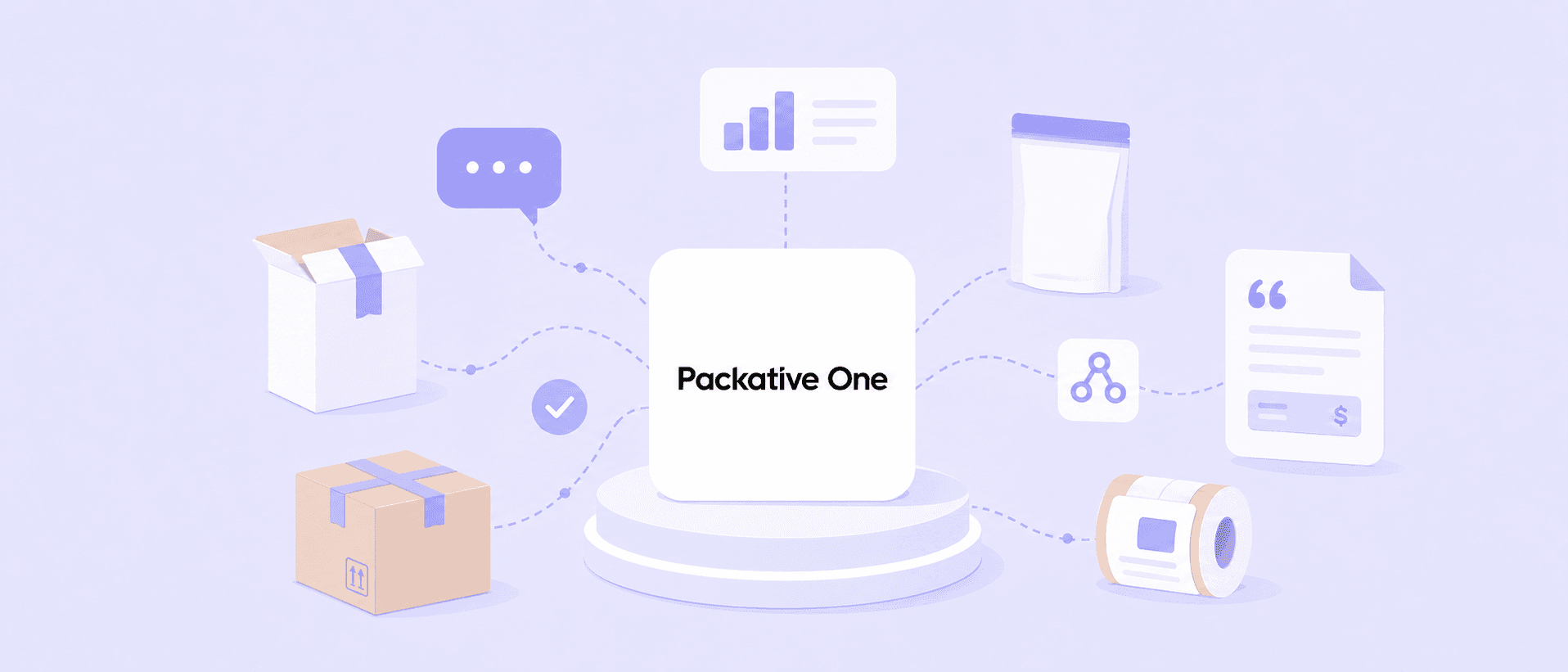
Packative One runs that path on one platform, in one workflow: RFQs become quotes, quotes become orders, orders become production, without the data being retyped at any handoff.
Why Packaging Is Still Stuck on Email and Spreadsheets
Because the hard part of packaging was never the software vendors' priority. The industry already spends billions every year on world-class hardware: digital presses, ECMA and FEFCO dies, finishing lines, colour management. The press is fast. A modern digital press runs a job in minutes.
The slow part is everything before the press. A quote travels through twelve inboxes, three spreadsheets, two PDFs, and a handwritten note before anyone responds. On public forums, converters still ask each other which software they use just to manage box creation, because nothing has become the obvious answer.
A quote in this industry can take hours, days, or months. Not because making the box is slow, but because deciding what the box costs is a manual relay race.
Why an Existing Vendor Has Not Already Built It
The incumbents were built for a different era. The market leaders in packaging-native software (Amtech, ePS, Theurer, Kiwiplan, HiFlow, Label Traxx, Sistrade, Tharstern, CERM) are all sub-$100 million private companies. Most were founded in the 1980s or 1990s. Most were recently acquired by private-equity firms consolidating the category for cash flow.
None of them is AI-native. None is building for agent-to-agent commerce. They sell software to print shops, and they added AI as a layer over decades-old code rather than as a foundation.
That is exactly the shape of an industry that gets one new operating system: a small, technical, recurring-revenue category with no AI-native incumbent and no platform play.
How Big the Opportunity Actually Is
Big enough to matter, small enough that no monopoly has formed. Multiple independent market reports converge on a packaging-native software market of roughly $1.5–2.5 billion in 2025, growing toward $3.5 billion by 2032. The AI-in-packaging market sits alongside it at $2.6–3.2 billion in 2025, forecast to reach $5–8 billion by 2030–2034.
Combined and adjacent, the addressable software market is roughly $4–5 billion today, growing toward $10–15 billion by the early 2030s. The AI portion grows fastest, well ahead of the legacy ERP and MIS portion the incumbents own.
What Changes When Packaging Runs on One System
The whole flow collapses from "I need a box" to "the press is running" inside one data model, with no rekeying and no version drift. Concretely:
-
Inbound stops leaking. Every RFQ gets read and routed, whether it arrives by email, fax, messaging thread, or as a handwritten order photographed on a phone.
-
Quotes drop from days to minutes. A real cost model prices the job instead of an estimator's memory.
-
Pricing stays live. When paper, ink, foil, or freight prices move, open quotes re-price against the new numbers.
-
Specs survive the handoff. Dieline, yield, and artwork validation feed the same order record, so the file the press receives is the file the customer approved.
-
Margin becomes a setting, not a mood. The system holds the margin band instead of leaving it to whoever happens to be quoting that day.
We Built It for Ourselves First
This is not a theory we are selling. Packative does not own a press. In a market with thousands of converters, all of them closer to the machines, the only way to compete was to be radically better at the parts of the business that are not metal: quoting, sourcing, designing, routing, and following up.
Packative One is that system. Since 2021 it has scaled with our own operations, and every converter who adopts it runs the same software our own sales team runs. The origin story is written down in full, including the parts that were painful.
The Category Is Open. It Will Not Stay Open.
There is no Salesforce of packaging, no Shopify of packaging, yet. The industry produces over $1.2 trillion in goods on software that has never been consolidated into a platform. That is the definition of an open category, and open categories get claimed.
If you run a converter or a trading operation and want to see what the system looks like against your own workflow, book a demo and bring a real job.
Câu Hỏi Thường Gặp
No. An ERP or MIS focuses on production and the back office. A packaging operating system starts at sales, reading inbound, pricing quotes and managing the pipeline, then connects through to production. It can sit in front of an existing ERP, or replace one that was never there.
First published on the Packative blog in May 2026. Revised here with current product naming.