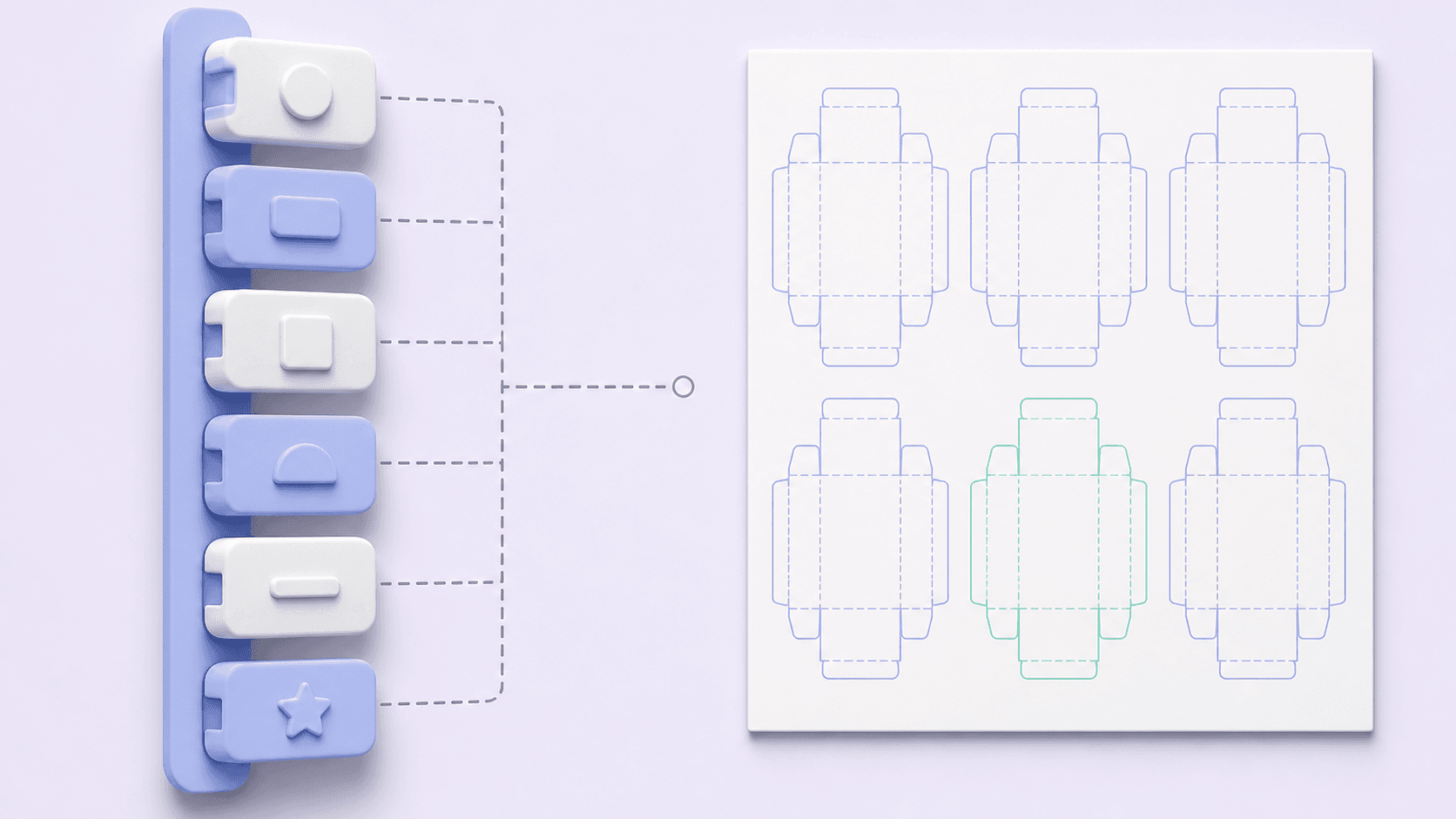
The search usually starts the same way. Quotes are slow, margins are unpredictable, nobody can say what the pipeline looks like, so someone types "packaging ERP" into Google and the project begins.
Nine months and a consultant later, quotes are often still slow, because quoting was never what the ERP was for.
What Each System Is Actually For
The category names blur together in marketing copy, so here is the honest division of labour:
| System | Owns | Typical trigger to buy |
|---|---|---|
| ERP | Inventory, purchasing, finance, planning | Financial and stock control across the business |
| Print or packaging MIS | Job tickets, scheduling, shop-floor data, production costing | The plant is a black box |
| Quoting and sales platform | Inbound requests, costing, quotations, pipeline, reorders | Quotes are slow, inconsistent, or unwinnable |
Most converters run at least one of the first two, often something installed a long time ago and extended since. Very few run the third. The quote desk is usually spreadsheets, an inbox, and one estimator who knows the cost model, which is why it is where the delay lives.
A fourth name turns up on shortlists that arrive from a parent company: CPQ, for configure, price, quote. It belongs in the third row above, with one caveat worth knowing before the first meeting, which is that most CPQ software has never priced a box.
How to Tell Which Problem You Have
Work through these honestly. They are diagnostic, not rhetorical.
- How long from inquiry received to quote sent? If the answer is in days, and your press runs the job in hours, your constraint is in front of the plant.
- Can two people price the same job and land on the same number? If not, the cost model lives in someone's head rather than in a system, and no ERP module will move it.
- When a customer asks why a price changed, how long does the answer take? If it means reconstructing a spreadsheet, you have a traceability problem at the quote, not in production.
- What share of inquiries never receive a quote at all? Most converters cannot answer this, which is itself the answer. Nothing is measuring the top of the funnel.
- Is anything actually blocked on the floor? Late jobs, machine conflicts, inventory surprises, work in progress nobody can locate. If yes, that is genuinely production control, and it is genuinely an MIS or ERP conversation.
If your honest answers cluster in the first four, an ERP replacement is an expensive way to not fix the problem.
Why the Quote Desk Is the Expensive One
Because it is where deals are decided, and it is measurable in ways production delays are not.
Buyers in manufacturing are explicit about the timing: 67% expect a quote in under 24 hours and only 6% will wait past three days, and 75% make the purchasing decision within a week of receiving quotes. Meanwhile 49% of packaging brand owners name supply-chain responsiveness among their major challenges. The window is short, the buyer is impatient, and the shop that answers first is arguing from an anchor everyone else has to work against.
An ERP does not shorten that window. It was never trying to.
Nor does an ERP tell you which quotes you have already sent are still priced on last quarter's board. That is a quote-desk question, and in a year with three announced containerboard increases in five months it is one worth being able to answer in minutes.
What "Fix Quoting First" Actually Means
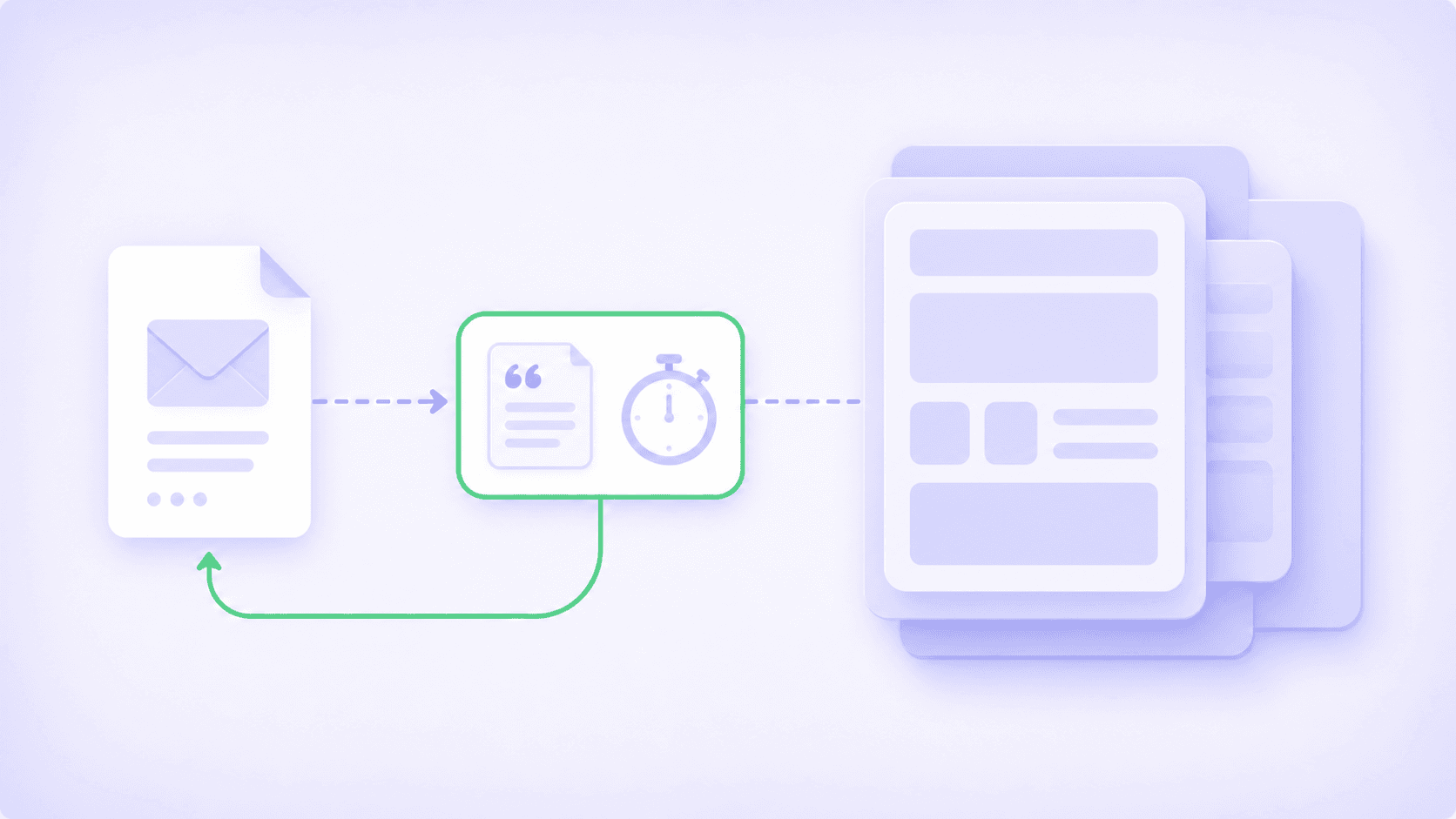
It means putting a system where the estimator's spreadsheet is, and leaving everything downstream alone:
- The cost model gets written down as configured pricing rules, the steps your best estimator runs over cost tables you maintain, so pricing stops depending on one person's availability.
- Every quote carries its own audit trail, so a price can be explained months later without reconstruction.
- Inbound stops leaking, because requests land in a pipeline rather than in individual inboxes.
- Reorders stop being retyped, because the customer's product portfolio persists between orders.
- Confirmed orders pass to whatever you already run, through an open API.
That last point is the one that makes this a smaller decision than it sounds. You are not replacing your finance system. You are putting something in front of it, in the gap where nothing lives today.
When You Should Buy the ERP
We would rather scope this honestly than win a bad fit, so: if the pain is on the plant floor, buy for the plant floor.
Packative One does not do machine scheduling, work-in-progress tracking, shop-floor data capture, or production control. If jobs are late because the schedule is a whiteboard, or you cannot tell what is running right now, that is an MIS or ERP requirement and we are not it. The same disqualification is written on our pricing page, because a customer who buys the wrong thing is worse than one who never bought.
The common outcome is not either-or. It is sequence. Fix the quote desk in weeks, with one team, measurable immediately in response time and win rate, then decide whether the production system still needs replacing. Often the ERP project that felt urgent turns out to have been a quoting complaint wearing an ERP costume.
If you want to work out which one you have, book a demo and bring a real job. If you would rather see the arithmetic first, the ROI model puts numbers on what your current quote turnaround costs.
Câu Hỏi Thường Gặp
An ERP runs the back office: inventory, purchasing, scheduling, finance. A print or packaging MIS sits closer to the plant, handling job tickets, scheduling, and shop-floor data. A quoting system owns everything before that: reading the inquiry, costing it, producing a defensible price, and tracking whether it converts. They solve different problems, and only one of them is usually what a converter is complaining about.